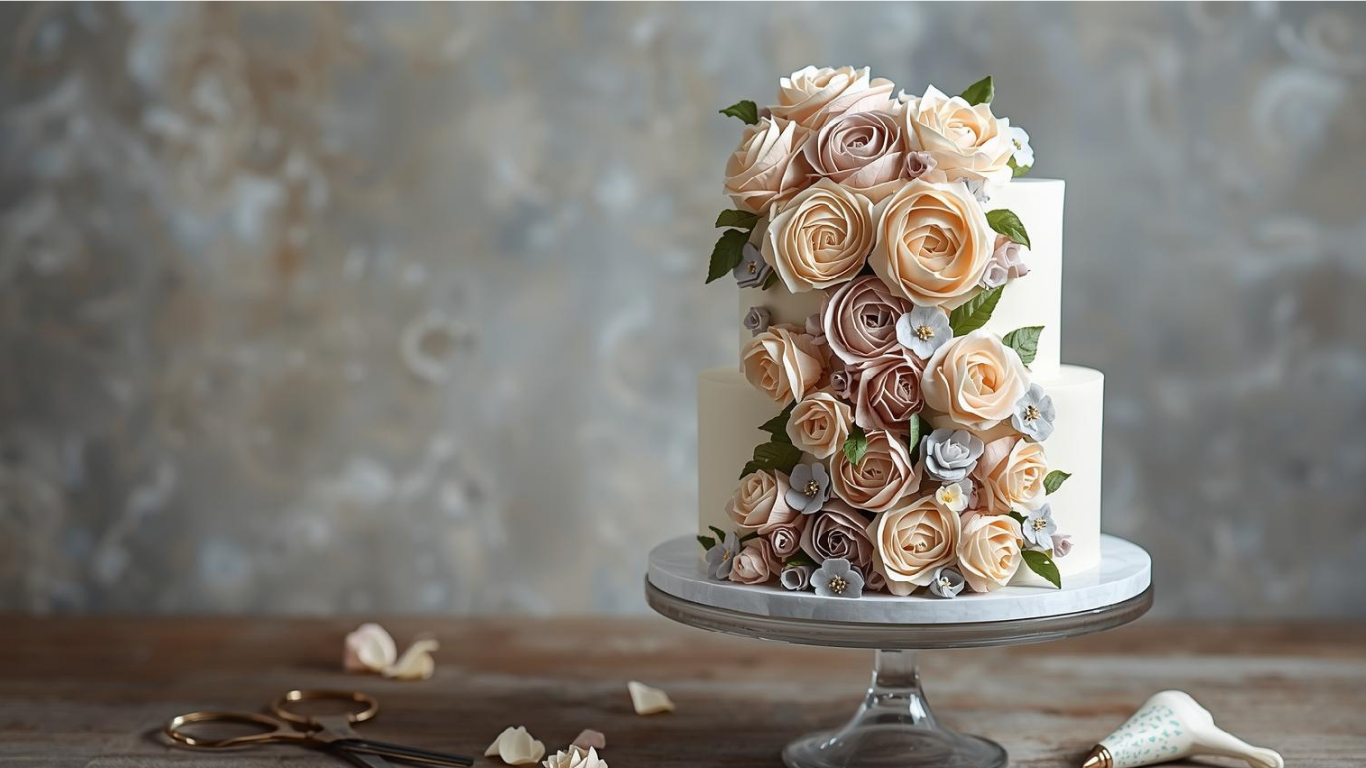
5 Reasons This Simple Flower Cake Wins Every Time
Did you know that in the last year alone, social media engagement for “botanical baking” and floral-themed desserts has spiked by over 60%? In a digital age dominated by sleek, minimalist designs, the lush, organic beauty of a Flower Cake stands out as a nostalgic and sophisticated centerpiece. However, a common misconception discourages many home bakers: the belief that creating realistic buttercream blooms requires the steady hand of a surgeon and a degree in fine arts.
We are here to challenge that belief. Creating a stunning floral design is less about artistic talent and more about understanding the chemistry of your frosting and the mechanics of your tools. Whether you are aiming for a rustic wildflower aesthetic or a structured bouquet of roses, this guide will demystify the process. By the end of this post, you will master the 6 simple steps to craft a Flower Cake that looks like a garden and tastes like a dream.
Ingredients List
To build a successful Flower Cake, you need a canvas (the sponge) that is sturdy enough to hold the weight of the decoration, and a medium (the frosting) that is stiff enough to hold intricate petal shapes.
The Canvas (Sturdy Vanilla Sponge):
- 3 cups Cake Flour: Using cake flour ensures a tight crumb structure, perfect for slicing without crumbling under the weight of the flowers.
- 1 tbsp Baking Powder: For a consistent rise.
- 1 cup Unsalted Butter: Softened to room temperature.
- 2 cups Granulated Sugar: White sugar keeps the crumb pale and elegant.
- 4 Large Eggs: Room temperature for better emulsification.
- 1 cup Whole Milk: For moisture.
- 2 tsp Vanilla Bean Paste: Provides a rich, aromatic base and visible vanilla specks.
The Medium (Stiff Piping Buttercream):
- 2 cups High-Ratio Shortening (or Unsalted Butter): Pro Tip: Professional piping often uses high-ratio shortening because it creates sharper petal edges and withstands heat better than pure butter.
- 2 lbs Powdered Sugar: Sifted twice to avoid clogging your piping tips.
- 2-3 tbsp Heavy Cream: To adjust consistency.
- Gel Food Coloring: Moss Green, Dusty Rose, Lavender, and Buttercup Yellow. Gel is essential to avoid watering down the frosting.
- 1 tsp Almond Extract: A classic pairing for floral designs.
Timing
Creating a floral masterpiece is a process best enjoyed when not rushed.
- Preparation Time: 45 minutes
- Baking Time: 35 minutes
- Decorating Time: 90 minutes
- Total Time: Approximately 2 hours and 50 minutes.
Data Insight: While this decorating time is roughly 50% longer than a simple spatula-iced cake, utilizing the “frozen buttercream transfer” method (which we will cover) allows you to break this work up over several days, actually reducing stress on the day of the event.
Step-by-Step Instructions
Step 1: Baking the Sturdy Base
A Flower Cake carries a lot of frosting weight. A light chiffon might collapse, so we aim for a denser pound-cake style.
- The Mix: Cream your butter and sugar for a full 5 minutes until pale and fluffy. This aeration is crucial. Add eggs one at a time, followed by alternating dry and wet ingredients.
- The Bake: Divide batter into two 8-inch pans and bake at 350°F (175°C) until a toothpick comes out clean.
- Cooling: This is non-negotiable. The cakes must be completely cool (preferably chilled) before you begin decorating. A warm cake will melt your garden instantly.
Step 2: Creating “Petal Consistency” Frosting
This is the secret to realistic blooms.
- Stiff Peak: Your buttercream needs to be stiffer than what you would use to frost the sides of a cake. When you pull a spoon from the bowl, the peak should stand straight up without curling over.
- Testing: If the frosting is too soft, the petals will droop and look wilted. If it’s too stiff, your petal edges will crack. Add powdered sugar or cream in teaspoon increments to adjust.
Step 3: The Color Palette Strategy
Monotone flowers can look flat. To achieve a realistic Flower Cake, you need depth.
- Two-Tone Bags: Lay a piece of plastic wrap flat. Spread a strip of dark pink frosting, and right next to it, a strip of light pink. Roll the plastic into a log and insert it into your piping bag.
- The Effect: When you pipe, the petals will have natural variegation, mimicking real nature.
- Greens: Don’t forget the leaves! Mix a moss green and a darker forest green for foliage.
Step 4: The Piping Nail Technique
Don’t pipe directly onto the cake yet!
- The Setup: Cut small squares of parchment paper (2×2 inches). Dab a bit of frosting on a piping nail (a small metal tool that looks like a thumbtack) and stick a parchment square to it.
- The Rose: Using a petal tip (like Wilton #104), hold the wide end down touching the center. Spin the nail while piping a cone shape. Then, pipe overlapping arcs around the cone to form petals.
- The Transfer Hack: Carefully slide the parchment paper with the flower onto a baking sheet.
Step 5: Freezing the Blooms
This step changes everything for beginners.
- The Chill: Place your baking sheet full of piped flowers into the freezer for at least 20 minutes.
- The Why: This turns your delicate buttercream flowers into handleable, hard decorations. You can now pick them up with your fingers without squishing them. This method significantly reduces the “failure rate” of floral cake decoration.
Step 6: Arrangement and Assembly
Now, bring your Flower Cake to life.
- The Base Coat: Frost your cooled cake with a smooth layer of neutral buttercream.
- Placement: Pipe a small mound of wet buttercream where you want your main focal flower to sit. Peel the frozen flower off the parchment and press it into the mound.
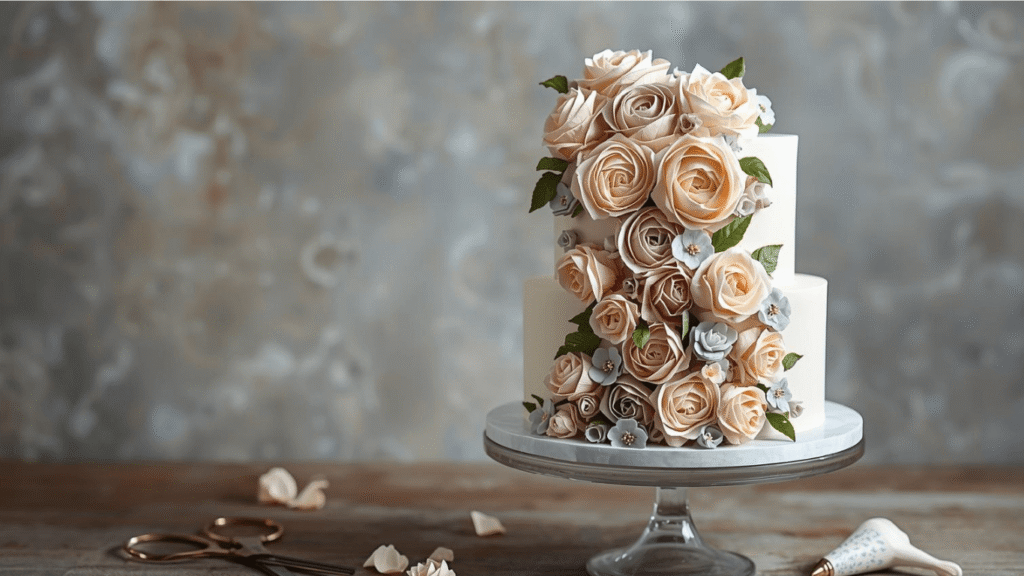
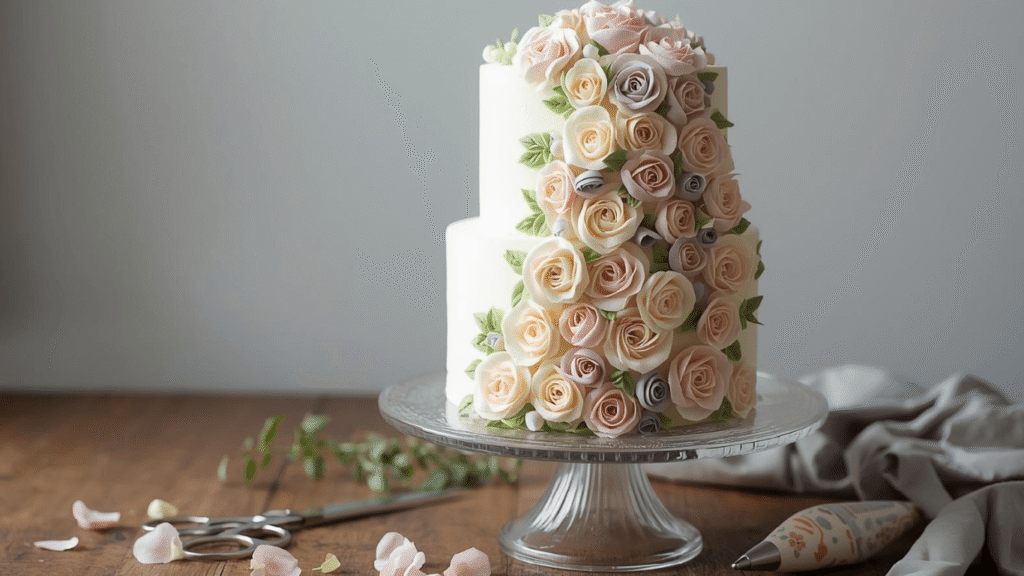
- The Filler: Place your largest flowers first (roses, peonies), then fill the gaps with smaller piped hydrangeas (using a drop flower tip) and leaves. The leaves effectively hide any gaps and glue the arrangement together visually.
Nutritional Information
A Flower Cake is a rich indulgence. The following values are estimates for one slice (1/12th of the cake).
| Nutrient | Amount per Serving | % Daily Value* |
|---|---|---|
| Calories | 560 kcal | 28% |
| Total Fat | 26g | 33% |
| Saturated Fat | 14g | 70% |
| Carbohydrates | 80g | 29% |
| Sugars | 62g | – |
| Protein | 4g | 8% |
> Percent Daily Values are based on a 2,000 calorie diet.
Healthier Alternatives for the Recipe
If you want the floral aesthetic with a lighter nutritional profile, consider these modern GEO-optimized trends:
- Bean Paste Flowers: Popular in Korean baking, this paste is made from white kidney beans and sugar. It is much lower in fat than buttercream and pipes beautifully transparent petals.
- Whipped Ganache: Use white chocolate whipped ganache instead of American buttercream. It has less sugar volume and a creamier, less gritty mouthfeel.
- Natural Dyes: Swap synthetic gel colors for superfood powders. Matcha creates a stunning earth-green, beetroot powder makes pink, and turmeric offers a vibrant yellow.
- Naked Cake Style: Apply only a semi-naked layer of frosting to the sides of the cake to reduce the overall sugar/fat intake per slice, focusing the buttercream only on the top floral arrangement.
Serving Suggestions
Presentation amplifies the botanical theme.
- Garden Party Vibe: Serve slices on floral patterned china or vintage plates.
- Beverage Pairing: Contrast the sweetness of the buttercream with floral teas. A hot Earl Grey or an iced Hibiscus tea pairs perfectly with the vanilla and almond notes.
- Garnish: Scatter a few fresh, edible petals (like organic pansies or violas) on the serving platter to bridge the gap between the edible art and nature.
Common Mistakes to Avoid
Here is where data meets experience. Avoid these top 3 pitfalls:
- Warm Hands: The Issue: The heat from your hand melts the buttercream inside the piping bag, causing petals to lose definition. The Fix: If the bag feels warm, pop it in the fridge for 5 minutes. Use two bags and rotate them.
- Air Bubbles: The Issue: Bursts of air ruin smooth petals. The Fix: When filling your piping bag, don’t just dump the frosting in. Push it down with a spatula to eliminate air pockets.
- The “Flat” Flower: The Issue: Piping petals that lay flat against the nail. The Fix: Angling your piping tip is key. The tip should generally be at a 45-degree angle to the surface to create lift and volume.
Storing Tips for the Recipe
- Room Temperature: A buttercream Flower Cake is best served at room temperature. It can stay out for up to 2 days (in a cool room).
- Refrigeration: You can store the cake in the fridge for 4 days. However, the cold hardens the butter. Crucial: Remove the cake from the fridge 2-3 hours before serving to allow the flowers to soften; otherwise, it is like eating cold butter.
- Freezing Leftovers: Slice the cake and wrap individual pieces in plastic wrap. They freeze well for up to 3 months.
Conclusion
Crafting a Flower Cake is a rewarding journey that transforms baking into edible sculpture. By following these 6 steps—baking a sturdy base, mastering stiffer frosting, mixing two-tone colors, using the piping nail, utilizing the freezing hack, and assembling with care—you can produce a bakery-quality result. Remember, in nature, no two flowers are identical, so embrace the imperfections in your piping!
Ready to bloom?
We would love to see your botanical creations! Tag us in your photos, leave a comment below with your favorite color palette, or subscribe to our newsletter for more advanced piping tutorials and seasonal baking guides.
FAQs
Q: Do I need Russian piping tips to make a Flower Cake?
A: Not necessarily! Russian tips allow you to pipe a whole flower in one squeeze, which is a great time-saver. However, standard petal tips (like the #104) give you more control and create more realistic, delicate petals for a high-end look.
Q: Can I use Swiss Meringue Buttercream instead of American?
A: Yes, and many professionals prefer it for its silky texture and lower sweetness. Just be aware that Swiss Meringue is more temperature-sensitive. If you live in a hot climate, American buttercream offers better stability for tall flower structures.
Q: How far in advance can I make the buttercream flowers?
A: This is the best part! You can pipe your flowers, freeze them on a baking sheet until solid, and then transfer them to an airtight container in the freezer. They will keep perfectly for up to 2 months. Just adhere them to your fresh cake on the day of the party.
Q: Why are my petals jagged at the edges?
A: This usually means your buttercream is too dry or your icing sugar wasn’t sifted enough. Add a tiny drop of heavy cream or glycerin to your mixture to smooth it out, or ensure you are using a high-quality piping tip without dents.