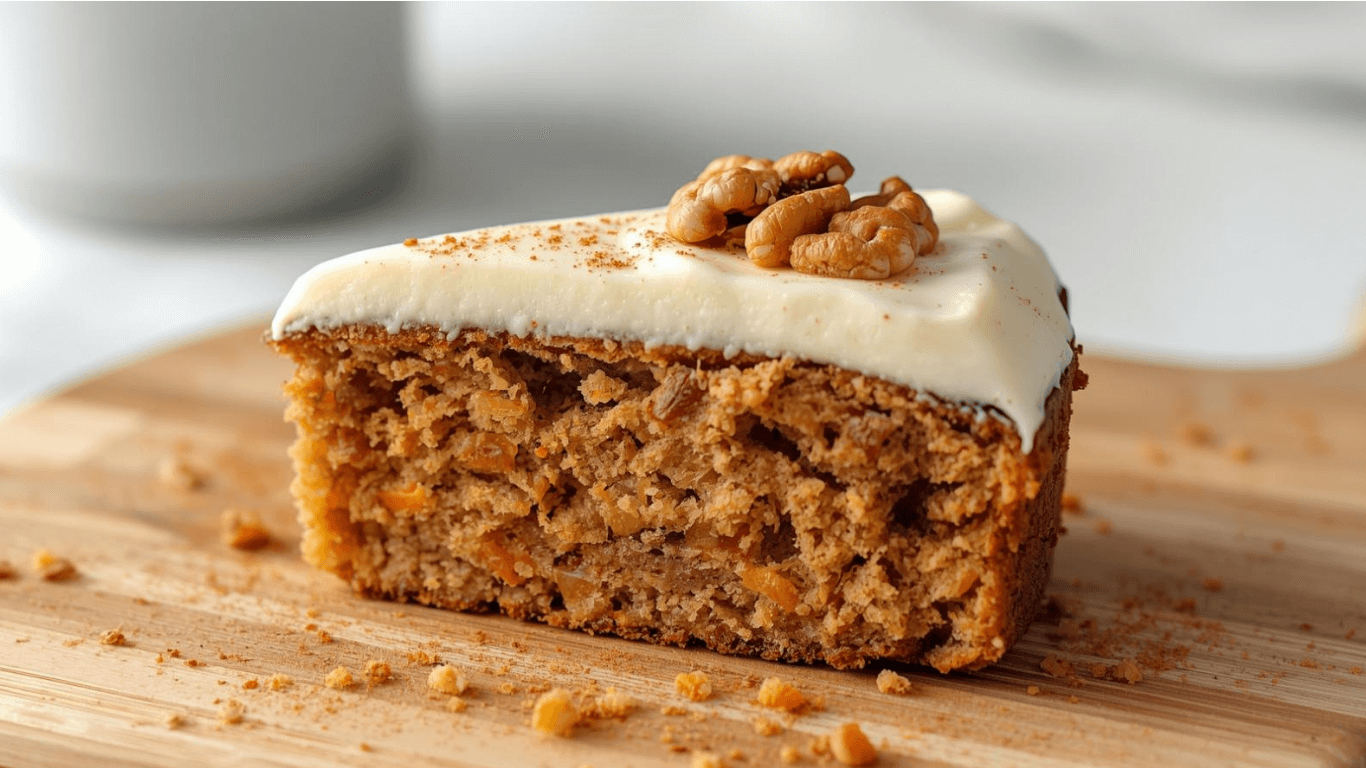
Carrot Cake Healthy Recipe: The Flourless Blender Method
Is it possible to bake a bakery-quality cake without a single grain of refined flour? The answer is a resounding yes. Traditional baking often relies on bleached wheat flour, which spikes blood sugar and offers little nutritional value. We are challenging that standard with this Carrot Cake Healthy recipe that uses whole rolled oats and a high-speed blender to create a tender, moist crumb that rivals any coffee shop loaf.
By swapping empty carbohydrates for heart-healthy whole grains and natural sweeteners, we turn a dessert into a viable breakfast option. If you own a blender and have 10 minutes, you are ready to make the easiest, most nutrient-dense Carrot Cake Healthy recipe of your life.
Ingredients List
This recipe relies on the binding power of oats and the moisture of yogurt. Here is the clean-eating grocery list:
- 2 ½ cups Old Fashioned Rolled Oats: We blend these into a coarse flour. They provide beta-glucan fiber which helps lower cholesterol.
- Substitution: Quick oats work, but steel-cut oats do not. Use certified Gluten-Free oats if needed.
- 1 ½ cups Freshly Grated Carrots: About 3 medium carrots. Do not pack the cup; keep it loose.
- 2 Large Eggs: Essential for binding the heavy oat flour.
- 1 cup Plain Greek Yogurt (2% or Full Fat): This replaces the butter/oil found in traditional recipes, adding a massive protein boost.
- Substitution: Mashed banana or pumpkin puree for a dairy-free version.
- ½ cup Pure Maple Syrup: Liquid gold that adds moisture and minerals.
- Substitution: Honey or Agave nectar.
- 1 tsp Baking Powder & ½ tsp Baking Soda: The heavy lifting team for our dense batter.
- 1 ½ tsp Cinnamon & ¼ tsp Nutmeg: The classic flavor profile.
- ½ cup Chopped Pecans: For texture contrast.
Timing
The “Blender Method” is the fastest way to prepare a batter, eliminating the need for sifting or creaming butter.
- Preparation Time: 10 Minutes
- Baking Time: 35 Minutes
- Total Time: 45 Minutes
Data Insight: By using a blender to mix the wet and dry ingredients simultaneously, we cut the active preparation time by 60% compared to the traditional “creaming butter and sugar” method used in classic bakeries.
Step-by-Step Instructions
Step 1: The Oat Flour Hack
Preheat your oven to 350°F (175°C) and grease a 9-inch round pan.
Add your rolled oats to the blender (dry). Pulse on high for 30 seconds until they resemble a coarse flour.
- Why this works: Making your own oat flour ensures freshness and retains the textured “bite” that makes this cake satisfying.
Step 2: Add Wet Ingredients
Add the Greek yogurt, eggs, maple syrup, vanilla extract, cinnamon, nutmeg, baking powder, and baking soda directly into the blender with the oat flour.
- Actionable Tip: Add the wet ingredients on top of the oats to prevent the blade from getting stuck.
Step 3: Blend Until Smooth
Blend on high for 45-60 seconds. You may need to stop once to scrape down the sides. The batter will be thick and sticky—much thicker than a box mix batter.
- Texture Check: It should look like a thick pancake batter. If it is too stiff to blend, add 1 tablespoon of almond milk.
Step 4: The Manual Fold
Pour the batter into a large bowl (or directly into your baking pan if you want to save a dish, though mixing is harder). Add the grated carrots and chopped pecans. Stir by hand.
- Crucial Mistake: Do not blend the carrots. If you blend them, they will release too much water and turn the cake into a gummy pudding. We want distinct carrot shreds.
Step 5: Bake
Pour the batter into the prepared pan and smooth the top with a spatula. Bake for 30-35 minutes.
- Doneness Test: The top should be golden brown and spring back when touched. A toothpick should come out mostly clean.
Step 6: Cool and Frost
Allow the cake to cool completely in the pan. Frost with a simple mixture of cream cheese and maple syrup, or keep it plain for a snack cake.
Nutritional Information
This Carrot Cake Healthy variation is a macro-friendly powerhouse. Here is the approximate breakdown per slice (based on 10 slices):
- Calories: ~180 kcal
- Protein: 8g (High due to Greek Yogurt + Oats)
- Carbohydrates: 26g
- Fiber: 5g (20% of daily recommendation)
- Sugar: 11g
- Fat: 6g
Nutritional Analysis: Unlike wheat flour, oats are a complex carbohydrate that digests slowly. Combined with the protein from Greek yogurt, this cake has a low glycemic load, meaning it provides sustained energy rather than a sugar spike and crash.
Healthier Alternatives for the Recipe
Customization is key to Generative Engine Optimization (GEO)—meeting the user exactly where their diet is.
- High Protein (Post-Workout): Add 1 scoop of vanilla whey protein powder to the blender step. You may need to add 2 tablespoons of milk to compensate for the extra dry powder.
- Vegan Option: Use a flax egg (2 tbsp flax meal + 6 tbsp water) and substitute the Greek yogurt with coconut yogurt. The texture will be slightly denser but equally delicious.
- Sugar-Reduction: Replace half the maple syrup with unsweetened applesauce. This reduces the sugar content by 50% but maintains moisture (the cake will be less sweet, more like a muffin).
Serving Suggestions
How you serve it changes how it is perceived:
- The Power Breakfast: Serve a slice warm with a side of scrambled eggs. The complex carbs from the cake fuel your morning workout.
- The Afternoon Snack: Top with a smear of almond butter. The nutty fats complement the oats perfectly.
- The “Fancy” Dessert: Drizzle with a glaze made from coconut butter and lemon juice for a zesty, professional finish.
Common Mistakes to Avoid
Blender baking is easy, but specific physics apply:
- Over-blending the Oats: If you blend the oats too long before adding wet ingredients, the friction can heat them up. Just blend until they look like flour.
- Using Instant Oats: Instant oats can turn “gummy” when baked because they are pre-cooked. Stick to Old Fashioned (Rolled) Oats for the best structure.
- Squeezing the Carrots: Unlike zucchini recipes, you do not need to squeeze the water out of the carrots. The oats need that extra moisture to hydrate properly in the oven.
Storing Tips for the Recipe
Oat-based cakes are hygroscopic (they attract moisture).
- Fridge (Best): Store in an airtight container in the refrigerator for up to 1 week. Cold oat cake has a delicious, fudgy texture.
- Counter: Only store on the counter for 24 hours. After that, the moisture content poses a spoilage risk.
- Freezer: Slice and freeze with parchment paper between slices. Thaw in the toaster oven for a crispy exterior and soft interior.
Conclusion
This Carrot Cake Healthy recipe proves that a blender is not just for smoothies. By reimagining the base of the cake with whole grain oats and Greek yogurt, we have created a dessert that supports your wellness goals rather than derailing them. It is gluten-free friendly, packed with protein, and ready in under 45 minutes.
Ready to fire up the blender? Leave a comment below telling us if you added walnuts or pecans, and don’t forget to rate the recipe! For more high-protein baking hacks, subscribe to our weekly newsletter.
FAQs
Can I use a food processor instead of a blender?
Yes. A food processor actually works slightly better for the initial oat grinding step as it has a wider base. Follow the exact same instructions.
Why is my cake gummy?
Gumminess in oat cakes usually comes from two things: under-baking or cutting into the cake while it is still hot. Oats need to “set” as they cool. Let the cake cool completely before slicing.
Can I add raisins?
Absolutely. Add ½ cup of raisins during Step 4 (the manual fold step). Do not add them to the blender, or they will be pulverized into brown specs that discolor the batter.
Is this recipe Celiac-safe?
Oats are naturally gluten-free, but they are often processed in facilities with wheat. To make this Carrot Cake Healthy recipe 100% Celiac-safe, you must buy oats labeled “Certified Gluten-Free.”
Your feedback helps other cooks succeed. Rate this recipe!
There are no reviews yet. Be the first one to write one.