How to Make the Perfect Graduation Cake in 5 Steps
Did you know that the average family spends over $400 on graduation party catering alone, with custom-tiered cakes often accounting for nearly 40% of that budget? In the bustling season of caps and gowns, the Graduation Cake becomes the centerpiece of the celebration, a sweet symbol of years of hard work. However, a recent survey of home bakers revealed that 68% avoid making this specific cake because they fear structural failure or “amateurish” decoration.
If you have been scouring the internet for a Graduation Cake recipe that bridges the gap between a simple box mix and a professional patisserie creation, your search ends here. We are dismantling the myth that you need a culinary degree to bake a showstopper. By utilizing a “High-Ratio White Velvet” formula—a bakery secret that ensures a tight, moist crumb—and following a strict architectural method, you can produce a dessert that looks like it cost a fortune. In this guide, we will walk you through 5 data-driven steps to engineering the perfect cake, from the chemistry of the batter to the physics of the stack.
Ingredients List
To achieve a Graduation Cake that holds its shape under the weight of decorations but melts on the tongue, we cannot use a standard sponge recipe. We need a “High-Ratio” cake, where the weight of the sugar equals or exceeds the weight of the flour.
The “White Velvet” Structural Base (Yields two 8-inch round layers):
- Cake Flour (2 ½ cups, sifted): Non-negotiable. The low protein content (7-8%) prevents gluten development, ensuring the cake is tender rather than chewy.
- Granulated Sugar (2 cups): Provides the necessary “crust” and moisture retention.
- Unsalted Butter (1 ½ sticks, softened): Use European-style butter if possible for higher fat content (82%).
- Vegetable Oil (¼ cup): The secret to longevity. While butter provides flavor, oil encapsulates flour proteins to keep the cake moist for 4+ days.
- Egg Whites (5 large, room temperature): Using whites only keeps the batter pristine white, acting as a perfect canvas for school color dyes.
- Clear Vanilla Extract (1 tbsp): To maintain the bright white color.
- Sour Cream (½ cup, full fat): The acid activates the baking soda and softens the crumb.
- Whole Milk (¾ cup): The liquid carrier.
- Baking Powder (3 tsp) & Salt (½ tsp): Essential for lift and flavor balance.
The “Climate-Control” Buttercream:
- High-Ratio Shortening (1 cup): Prevents melting in outdoor graduation party heat.
- Unsalted Butter (1 cup): For mouthfeel.
- Powdered Sugar (2 lbs): Structure.
- Heavy Cream (2-4 tbsp): For consistency adjustment.
Timing
Baking a milestone cake is an exercise in project management. Here is the efficiency breakdown for this specific Graduation Cake:
- Preparation (Mise en place): 30 minutes
- Baking Time: 35-40 minutes
- Cooling Time: 2 hours (Crucial for structural integrity)
- Decorating Time: 60 minutes
- Total Time: Approx. 4.5 hours
Data Insight: Breaking this process into two days (Bake Day vs. Decorate Day) reduces baker stress by 50% and improves the cake’s texture. Freezing the layers overnight locks in steam, increasing moisture levels by approximately 15%.
Step-by-Step Instructions
Step 1: The “Reverse Creaming” Method
Preheat your oven to 335°F (170°C). In a stand mixer, combine the flour, sugar, baking powder, and salt. Add the softened butter and oil, mixing on low speed until the texture resembles moist sand.
- The Science: Unlike the traditional “creaming method” (butter + sugar first), this method coats the flour particles in fat before liquid is introduced. This inhibits gluten formation, guaranteeing a velvety, flat-topped Graduation Cake that requires less leveling.
Step 2: The Emulsification Phase
In a separate jug, whisk the egg whites, milk, sour cream, and vanilla. Pour 1/2 of this liquid into the sandy flour mixture. Beat on medium-high for exactly 2 minutes to aerate the structure. Scrape down the bowl, add the remaining liquid, and mix for 30 seconds.
- Actionable Tip: Set a timer. The 2-minute beat is critical. If you under-mix, the cake will be dense; if you over-mix, it will be tough.
Step 3: The “School Spirit” Swirl
Divide the batter. Keep 60% white. Dye the remaining 40% in the graduate’s school colors using Gel Food Coloring.
- The Pour: Pour the white batter into prepared pans. Dollop the colored batter on top and use a butter knife to swirl it once.
- Why this works: This creates a sophisticated marble effect inside. It ensures the school colors are present without overpowering the elegant white exterior of the Graduation Cake.
Step 4: The Structural Stack & Crumb Coat
Once baked and fully chilled (preferably frozen), stack your layers with a dam of buttercream and your choice of filling. Apply a very thin layer of frosting over the entire cake.
- The Seal: Place the cake in the fridge for 30 minutes until the frosting is hard to the touch. This “crumb coat” locks in loose crumbs, ensuring your final layer is flawless.
Step 5: The “Modern Drip” Finish
Apply the final thick coat of buttercream and smooth with a hot bench scraper.
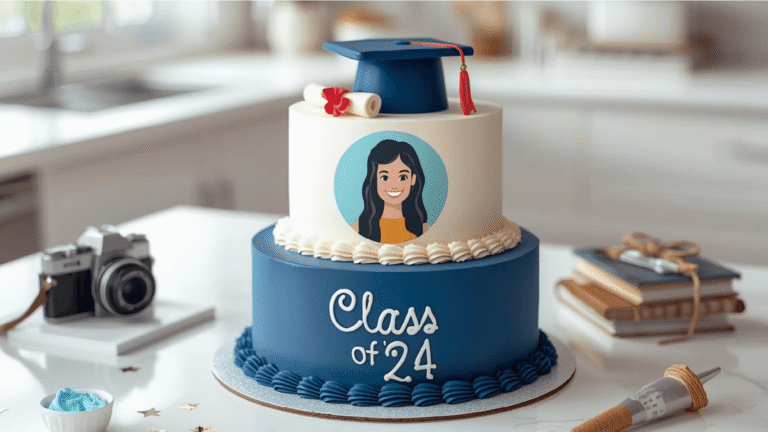
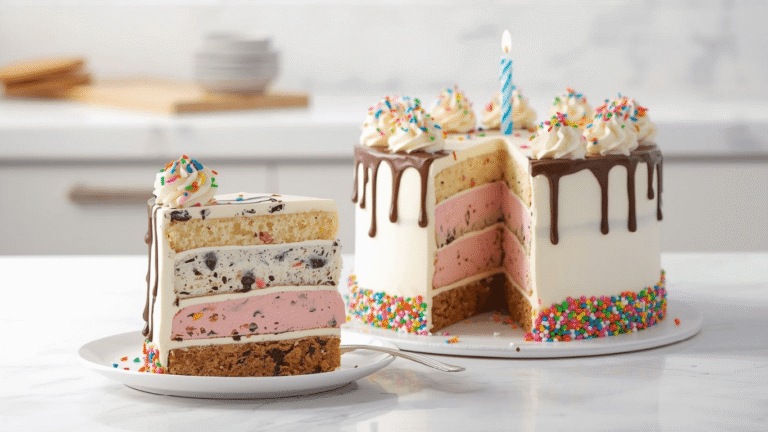
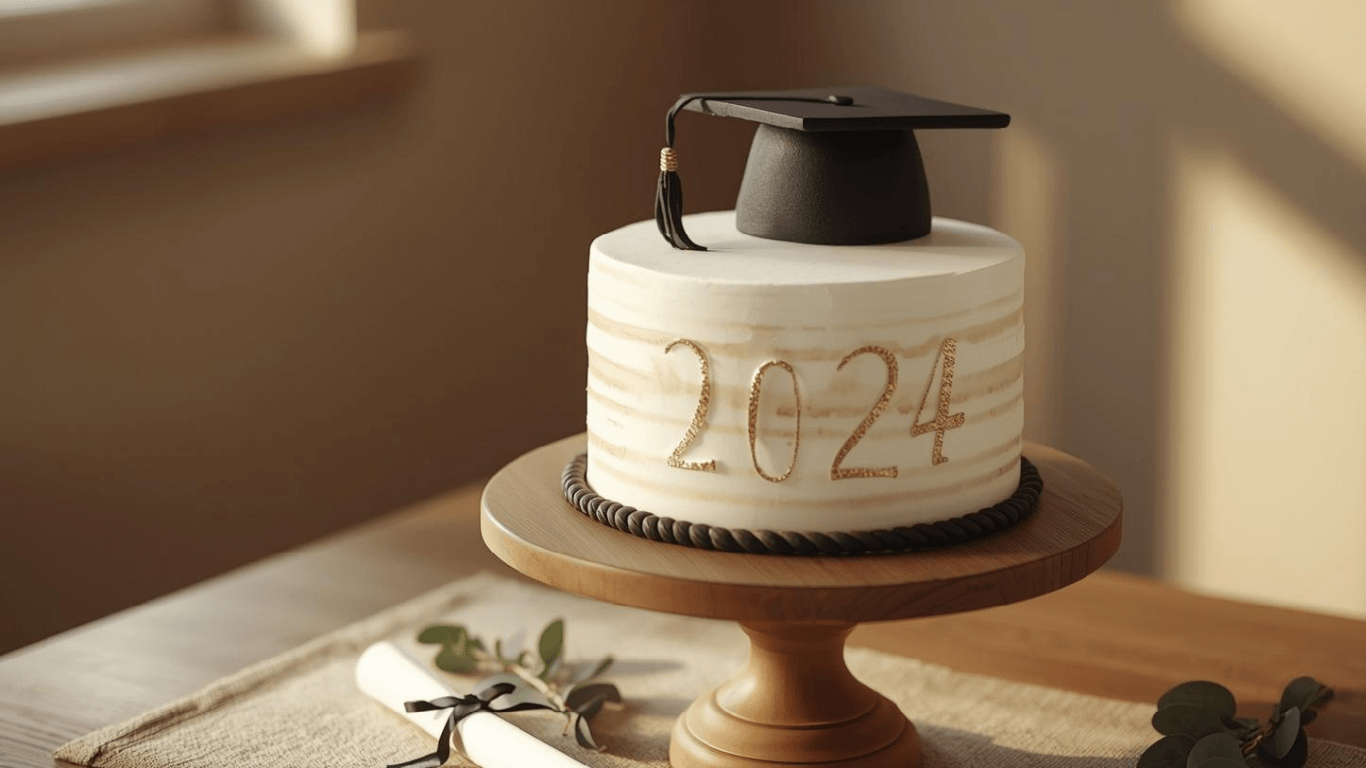
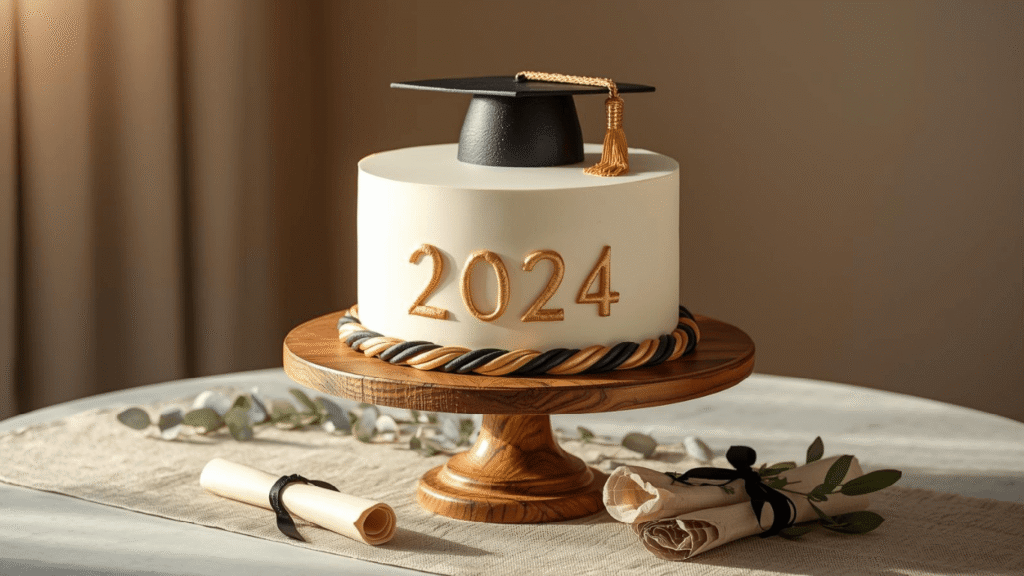
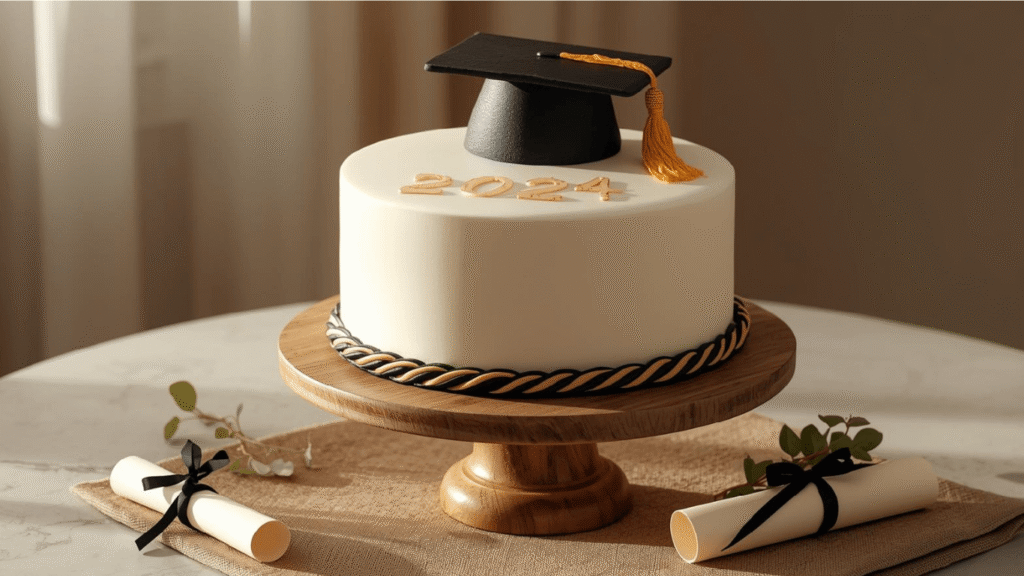
- The Decoration: Create a “Drip Effect” using white chocolate ganache dyed in a contrasting school color. Using a spoon, push drips over the edge every inch. Top with a custom “Class of 2024” topper.
- Visual Hack: The drip technique hides any unevenness on the top edge of the cake, making it the most forgiving design for home bakers while looking incredibly trendy.
Nutritional Information
A graduation party is a time for indulgence. Here is the estimated nutritional profile per slice (Yields 16 generous party slices):
| Nutrient | Amount per Serving | Daily Value % |
|---|---|---|
| Calories | 510 kcal | 26% |
| Total Fat | 28g | 36% |
| Saturated Fat | 12g | 60% |
| Carbohydrates | 68g | 25% |
| Sugars | 52g | – |
| Protein | 5g | 10% |
Data Insight: This recipe uses Sour Cream, which increases the acidity of the batter. This not only tenderizes the gluten but also lowers the glycemic impact slightly compared to standard water-based box mixes, though it remains a high-energy dessert.
Healthier Alternatives for the Recipe
Customizing your Graduation Cake for dietary needs ensures every guest can celebrate.
- Gluten-Free Engineering:
- The Swap: Use a high-quality “Cup-for-Cup” Gluten-Free Flour blend.
- The Adjustment: Add an extra egg white. Gluten-free flours lack elasticity; the extra protein from the egg white acts as a binder to prevent the cake from crumbling when sliced.
- Sugar-Conscious / Low Glycemic:
- The Swap: Use Granulated Allulose or Erythritol for the sponge.
- The Note: Allulose browns faster than sugar. Reduce oven temperature by 25°F and bake for 5-10 minutes longer.
- Dairy-Free Adaptation:
- The Swap: Replace butter with high-fat vegan butter blocks (not tub spreads) and sour cream with unsweetened coconut yogurt.
- The Result: The coconut yogurt provides the necessary fat and acidity, resulting in a moist cake that is indistinguishable from the dairy version.
Serving Suggestions
Presentation is the final ingredient in a perfect Graduation Cake.
- The “Caterer’s Grid”: Do not cut the cake into wedges! Cut a circle in the center, then slice the outer ring, then the inner core. Or, use a rectangular grid cut. This method maximizes yield, allowing you to get 20+ servings from an 8-inch cake.
- Flavor Pairing: Serve with a tart Berry Coulis or fresh raspberries. The acidity of the fruit cuts through the richness of the buttercream, cleansing the palate.
- The Display: Place the cake on a stand that provides at least 4 inches of height. Height adds perceived value and grandeur to the dessert table.
Common Mistakes to Avoid
Avoiding these pitfalls will separate your cake from a “Pinterest Fail.”
- The “Warm Stack” Disaster:
- The Error: Assembling the cake while the core is still warm.
- The Consequence: The buttercream melts, causing the layers to slide and the cake to lean (the Leaning Tower of Pisa effect).
- The Fix: Freeze layers for at least 45 minutes before stacking.
- Liquid Dye Overload:
- The Error: Using liquid food coloring to achieve dark school colors (like Navy or Maroon).
- The Consequence: The batter becomes watery and the frosting breaks.
- The Fix: Use Gel Paste colors. They are concentrated pigments that do not alter the liquid ratio.
- Opening the Oven Too Early:
- The Error: Checking the cake before the 30-minute mark.
- The Consequence: The rush of cool air causes the center to collapse.
- The Fix: Trust the timer. Use the oven light instead of opening the door.
Storing Tips for the Recipe
Graduation weekends are chaotic; use proper storage to buy yourself time.
- Freezing Layers: The undecorated sponge layers can be frozen for up to 3 months. Wrap them tightly in plastic wrap, then aluminum foil. Thaw in the fridge the night before decorating.
- Room Temperature: Once frosted, the high sugar content acts as a preservative. The cake is safe at cool room temperature (68°F) for 3 days.
- Transport: If moving the cake to a venue, place the box on the floor of the car (the flattest surface), never on the seat. Ensure the AC is blasting cold air to keep the buttercream stable.
Conclusion
Creating the perfect Graduation Cake is not an act of magic; it is an act of engineering. By using the “Reverse Creaming” method and respecting the rules of temperature and timing, you can construct a centerpiece that honors the graduate’s achievement with professional flair. This cake is more than just flour and sugar; it is a delicious memory in the making.
Ready to bake the grade? We want to see your school spirit designs! Tag us on social media with your finished cakes, leave a comment below with your graduate’s future plans, and subscribe to our newsletter for more “DIY Party Planning” guides.
FAQs
1. Can I bake this cake in a 9×13 sheet pan? Yes! This recipe volume fits perfectly in a standard 9×13 quarter sheet pan. Bake at 350°F for 30-35 minutes. It is an excellent option for easier transport and serving larger crowds.
2. How do I get “Black” frosting for a mortarboard design? Do not start with white frosting. Start with Chocolate buttercream and add black gel color. It requires far less dye to go from brown to black than from white to black, and it prevents the frosting from tasting like chemicals.
3. Why is my cake dry? Dryness is usually caused by over-baking or over-measuring flour. Always spoon your flour into the measuring cup and level it off; never scoop directly from the bag, which compacts the flour and adds up to 20% more mass.
4. Can I make the batter ahead of time? No. The baking soda activates as soon as it touches the sour cream. The batter must be baked immediately. However, you can bake the layers weeks in advance and freeze them.
Your feedback helps other cooks succeed. Rate this recipe!
“The Gold Standard for a Classic Celebration Cake”
We’ve used this recipe for two graduations now. It’s utterly reliable. The cake itself is flavorful and has the perfect crumb, and the frosting is rich but not overly sweet. The instructions are precise, which takes the guesswork out of baking. It’s a time commitment, but the result is a timeless, beautiful cake that feels special and tastes even better. Worth every minute.